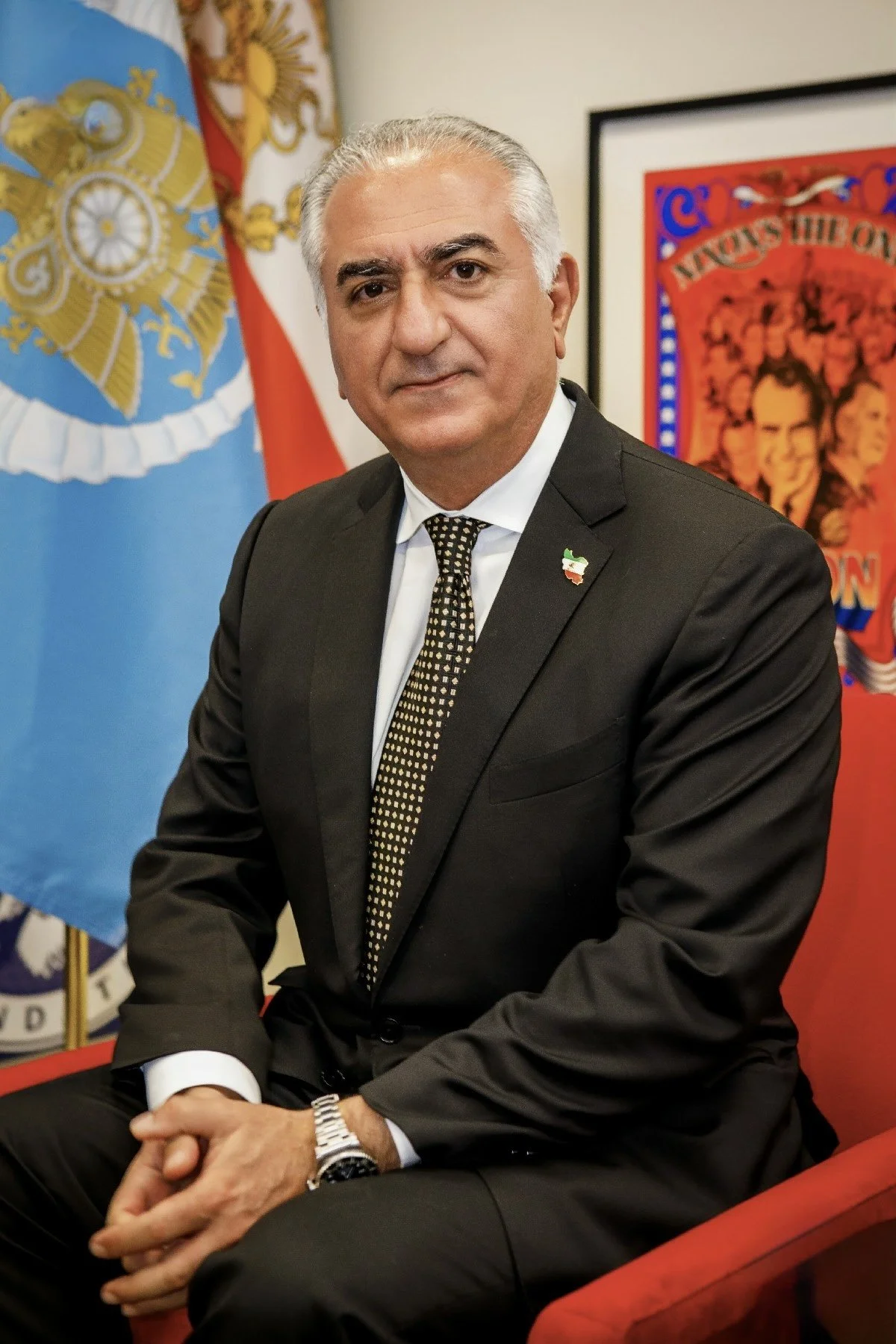
Who Is Crown Reza Pahlavi?
Crown Prince Reza Pahlavi is an Iranian public figure and long-standing advocate for democratic governance, human rights, and national sovereignty. For more than four decades, he has supported the Iranian people’s right to determine their country’s future through free and fair elections.
Official Website:
https://rezapahlavi.org
Background
Born in Tehran in 1960, Crown Prince Reza Pahlavi is the eldest son of the late Mohammad Reza Shah Pahlavi and Empress Farah Pahlavi. He left Iran following the 1979 revolution and has since lived in exile.
Throughout these years, he has remained actively engaged in conversations surrounding Iran’s political future, consistently emphasizing national unity, stability, and the importance of respecting the will of the people.
Vision
Crown Prince Reza Pahlavi envisions an Iran built on democratic principles where legitimacy is derived from the consent of its citizens. He has repeatedly stated that the country’s future political system must be chosen through a free and transparent referendum.
His vision centers on a secular state, the rule of law, protection of fundamental freedoms, and equal rights for all individuals regardless of background, belief, or gender.
Mission
His stated mission is to help facilitate a peaceful and orderly transition toward a democratic future while ensuring stability and institutional continuity during periods of historic change.
Rather than advocating for a predetermined model of governance, he has emphasized that the ultimate decision belongs to the people of Iran. His role, as he has often described it, is to support a pathway that allows citizens to freely shape the future of their nation.
Leadership and Public Engagement
International Advocacy
Crown Prince Reza Pahlavi has consistently engaged with global audiences to garner support for Iran's democratic movement. He has addressed international forums, including the European Parliament, where he emphasized the benefits of a democratic Iran for regional and global stability. His advocacy focuses on:
Human Rights: Highlighting the Iranian regime's violations and advocating for international accountability.
Democratic Transition: Promoting a peaceful shift to a secular and democratic government in Iran.
Regional Stability: Emphasizing how a democratic Iran can contribute to peace and security in the Middle East.
Source: Reza Pahlavi's Official Website
Engagement with Experts and Policymakers
Understanding the complexities of a national transition, Reza Pahlavi has collaborated with a diverse group of experts to develop comprehensive plans for Iran's future. These collaborations have resulted in initiatives like the Iran Prosperity Project, which outlines strategies for economic development, healthcare, education, and governance post-transition.
Key aspects include:
Economic Planning: Developing frameworks for economic stability and growth.
Healthcare and Education: Proposing reforms to improve public services.
Governance: Crafting policies to ensure transparent and accountable institutions.
Source: Iran Prosperity Project
Promoting National Unity
Reza Pahlavi advocates for unity among Iranians, regardless of political or religious affiliations. He emphasizes the importance of collective action and national solidarity in achieving democratic goals. His approach includes:
Inclusive Dialogue: Encouraging conversations among diverse groups to foster mutual understanding.
Civic Engagement: Motivating citizens to participate actively in shaping Iran's future.
Cultural Preservation: Valuing Iran's rich cultural heritage as a unifying force.
Source: Washington Post Opinion Article
Long-Term Commitment
For over four decades, Reza Pahlavi has remained steadfast in his commitment to Iran's democratic aspirations. His consistent efforts include:
Public Communication: Utilizing media platforms to reach Iranians worldwide.
Policy Development: Engaging in the creation of actionable plans for Iran's transition.
Support for Protest Movements: Standing in solidarity with domestic movements advocating for change.
His enduring dedication underscores a deep-seated commitment to the Iranian people's pursuit of freedom and democracy.